

⚔️ Colonel Esteban CantúThe Founder of Modern Mexicali
The visionary military man who turned Mexicali into the capital during the Revolution (1881-1966)
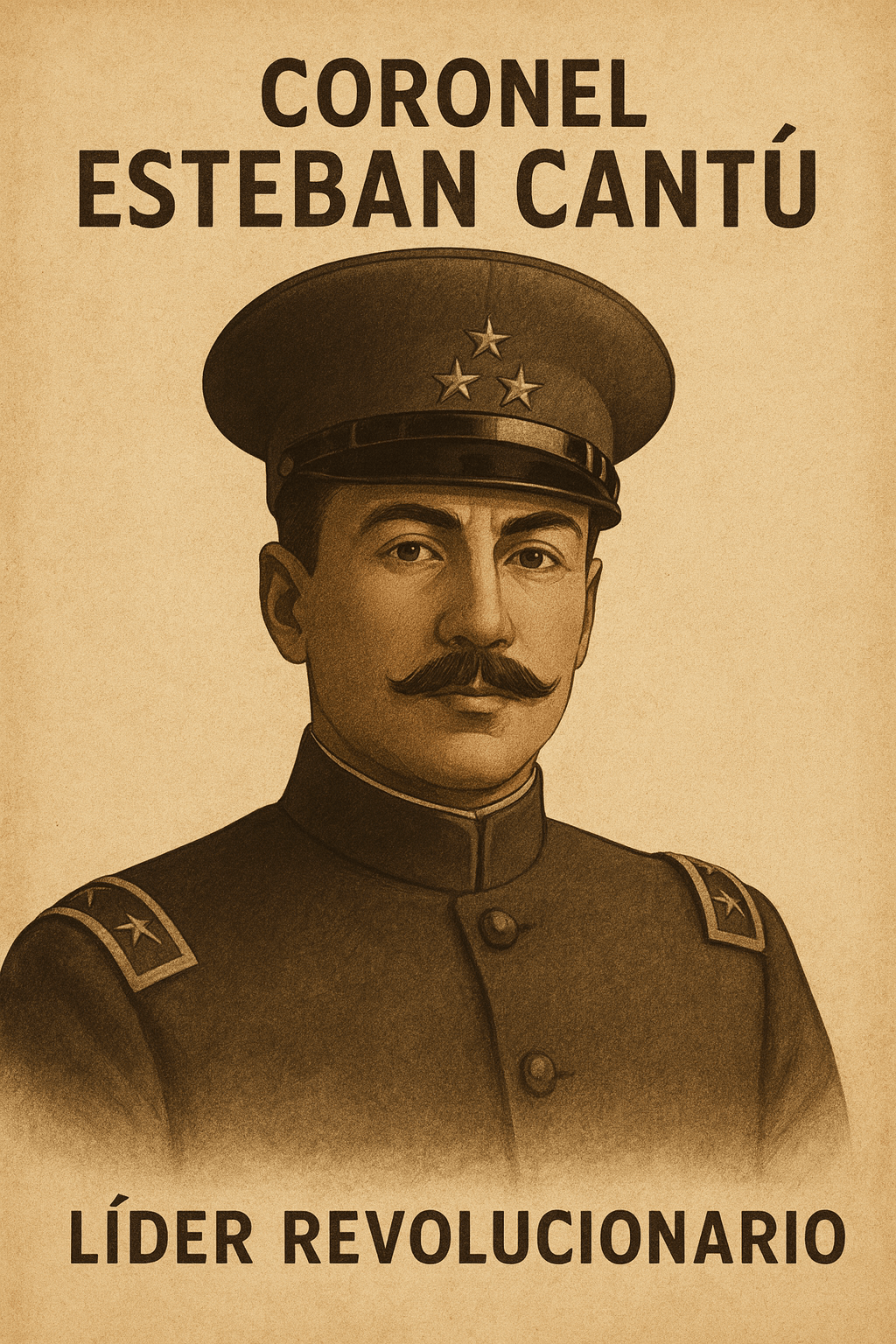
Colonel Esteban Cantú (1881-1966) - Founder of State 29
"I kept the peace in Baja California while all of Mexico burned in revolutionary flames"— On his leadership during the Mexican Revolution
Timeline: From Major to State Founder
1881
Born in Linares
Nuevo León, November 26
1911
Arrives in Mexicali
Major in the federal army
1915
Political Chief
Takes over the government of the territory
1915
Mexicali Capital
Moves the seat from Ensenada
1918
La Rumorosa Highway
Connects the valley with the coast
1920
Downfall and Exile
Peaceful resignation
1953
Senator
Recognition by the people
1966
Dies in Mexicali
At the age of 85
The Military Man Who Forged a Capital
🔥 A City Forged in Times of War
In the midst of the Mexican Revolution, when the country was bleeding in fratricidal struggles, a young 30-year-old soldier arrived in Mexicali with the mission of restoring order. Esteban Cantú Jiménez did not merely fulfill that mission: over the following nine years he transformed a dusty border hamlet into a prosperous regional capital, laying the foundations of the modern Mexicali we know today.
🛡️ The Strategy of Isolation
While Mexico tore itself apart in the bloodiest Revolution of its history, Baja California experienced a golden age of peace and progress under Cantú's government. His strategy was bold:
- "Isolate" the peninsula from the revolutionary chaos
- Maintain local stability until a strong central government emerged
- Develop the region while others fought
From Linares to Mexicali: The Origins of a Leader
👤 A Soldier from the North
Esteban Cantú Jiménez was born on November 26, 1881 in Linares, Nuevo León,into a family from northern Mexico. He grew up during the Porfiriato, an era of relative stability that contrasted dramatically with the turbulence that lay ahead.
🎖️ Porfirian Military Training:
- • Professional military education at the Military College
- • Training in discipline and administration
- • Institutional loyalty to the federal government
- • Experience in campaigns against rebel groups
- • Merit-based promotion through the military ranks
⚔️ The Mission in Baja California
On June 26, 1911, Cantú arrived in Mexicali as a major in the army,as part of the column sent to retake control after the Magonista rebellion. The Flores Magón brothers had briefly occupied several border towns.
🎯 His Original Mission:
- • Reestablish federal order on the border
- • Expel the Magonista insurgents
- • Guarantee border security
- • Protect the interests of agricultural companies
- • Avoid international incidents with the U.S.
The Great Decision: Mexicali as Capital
🏛️ January 21, 1915 - Historic Decree
One of Cantú's first and most far-reaching actions was to move the seat of the regional government from Ensenada to Mexicali. By decree of January 21, 1915, he ordered the relocation of the capital of the Northern District to the emerging city of Mexicali, a decision that became official in November of that year.
🤔 Why Mexicali?
The Achievements of His Government (1915-1920)
Infrastructure
- La Rumorosa Highway (1915-1918)
- Urban modernization of Mexicali
- Drainage system and laid-out streets
- Bridges over irrigation canals
- Electric lighting in main areas
Education
- Cuauhtémoc School (1915-1916)
- Network of schools in rural communities
- Trained teachers from other regions
- Modern educational programs
- Universal access to education
Government
- Mexicali as capital (1915)
- Municipalities of Tecate and Tijuana (1917)
- Organized local judicial system
- Security force of 1,800 men
- Efficient autonomous administration
Economy
- Innovative fiscal system
- The dollar as a stable currency
- Regulation of border activities
- Promotion of agriculture and commerce
- Economic autonomy from central Mexico
The Masterpiece: The La Rumorosa Road
🛤️ The Feat of La Rumorosa (1915-1918)
The crowning achievement of Cantú's government was the construction of the National Road, a highway that would connect Mexicali with the Pacific coast by overcoming the rugged Sierra de Juárez. This project, deemed impossible by many, would become one of the most important engineering feats of the era.
⛰️ The La Rumorosa Grade
Infrastructure Builder: His Great Works
🏗️ La Rumorosa Highway
Period: 1915-1918
Description: Connected Mexicali with the Pacific coast for the first time
Impact: Territorial integration of Baja California
Current status: Foundation of the current highway
🏗️ Cuauhtémoc School
Period: 1915-1916
Description: First modern school in Mexicali
Impact: Today's Casa de la Cultura
Current status: Active historical heritage
🏗️ Government Palace
Period: 1915-1920
Description: Seat of the regional government
Impact: Permanent administrative base
Current status: Evolved into the current system
🏗️ Municipalities
Period: 1917
Description: Tijuana and Tecate as municipalities
Impact: Modern territorial organization
Current status: Municipal structure still in force
🌟 The Transformative Impact of His Works
Cantú's infrastructure works were not simple constructions: they were founding acts that created the conditions for Mexicali to develop as a modern city. His long-term vision is reflected in the fact that many of these works remain fundamental to the life of the city more than a century later.
Innovative Financing: The "Vice Taxes"
💰 The Fiscal Challenge
Cantú faced a monumental challenge: how to finance an ambitious government in a region with exhausted coffers and no support from the central government. His solution was as controversial as it was effective.
🌵 Reality of the Border (1915-1920):
- • Casinos and gambling houses
- • Cantinas and clandestine distilleries
- • Opium dens and opium trade
- • Brothels and nightlife entertainment
- • Smuggling and irregular activities
⚖️ The Pragmatic Solution
Taking advantage of a Porfirian decree that permitted certain "vice businesses" in border areas, Cantú decided to legalize, regulate and tax these activities instead of fighting them in vain.
💡 His Justification:
- • They brought clandestine activities into the open
- • They enabled health and safety control
- • They financed public works and schools
- • They prevented corruption by legalizing the inevitable
- • Result: 44% of municipal revenue
The Final Challenge: The Fall of the "King of Baja California"
👑 The Autonomous Government (1920)
During his five years in power, Cantú had governed Baja California practically as an autonomous strongman. He did not remit taxes to the federal treasury, he refused to circulate the revolutionary currency of central Mexico, and he kept the U.S. dollar as the official medium of exchange.
⚔️ The Crisis of 1920
When Carranza was overthrown in May 1920, Cantú made a decision that would seal his fate: he refused to recognize the new provisional government.
- Called the convening of elections a "farce"
- Declared himself the only governor loyal to the legitimate government
- Peaceful resignation on August 18, 1920
Belated Recognition: Senator of the Republic
🇺🇸 The Years of Exile
After his forced resignation, Cantú immediately departed into exile in the United States, settling in Los Angeles. For decades he remained outside Mexican public life, watching from a distance the development of the region he had helped to forge.
🚫 Denial of Recognition:
In 1942 he requested to be recognized as a "veteran of the Revolution," but his petition was denied in 1945, probably because his record did not fit the official revolutionary narrative.
🏛️ The Triumphant Return (1953)
In 1952, Baja California became the 29th State of the federation, and the following year, in 1953, Cantú was elected Senator of the Republic representing Baja California.
🗳️ Popular Recognition:
His election marked his formal reappearance in Mexican politics and represented the recognition by the people of Baja California of the man who had been the founder of their state.
🏠 The Final Years in Mexicali
Cantú lived his final years quietly in the city of Mexicali that he had turned into the capital. He died in Mexicali on March 15, 1966, at the age of 85, surrounded by respect but without any display of wealth or power. His death closed the chapter of the man who had been the builder of an era in the region's history.
The Legacy of the Founder of State 29
🌟 "The Founder of What Is Now State 29"
Local historical consensus tends to regard Cantú as a precursor of Baja California's development. He has come to be called "the founder of what is now State 29," in reference to Baja California, recognizing that many of the economic, urban and institutional foundations of modern Mexicali were established during his administration.
🏙️ Cantú's Mexicali Lives On Today
Every time we travel along La Rumorosa, visit the Casa de la Cultura (the former Cuauhtémoc School), or enjoy the cultural diversity of La Chinesca, we are experiencing the direct legacy of Esteban Cantú.
- Mexicali as a permanent regional capital
- La Rumorosa as a vital connection
- Casa de la Cultura as an educational center
- Cultural diversity as a strength
To Learn More
Historical Sources
- • Historical Archive of the Municipality of Mexicali
- • General Archive of the Nation (Presidents Collection)
- • National Institute of Historical Studies
- • National Newspaper Library (newspapers of the era)
Places to Visit
- • Casa de la Cultura (former Cuauhtémoc School)
- • La Rumorosa Highway
- • Historic Center of Mexicali
- • Regional Museum of Mexicali
- • Municipal Historical Archive
For Researchers
- • University theses on the period at UABC
- • Official documents of his government
- • Preserved official correspondence
- • Photographs of infrastructure works
- • Testimonies of contemporaries
📞 Additional Information
Historical Archive
📞 Municipal Historical Archive:
(686) 558-1000
🏛️ Institute of Culture BC:
(686) 552-8400
📧 Email:
historia@mexicali.gob.mx
Contribute to History
📝 If you have historical information:
- • Photographs from Cantú's era
- • Testimonies from contemporary relatives
- • Relevant historical documents
- • Objects from the era of his government
- • Accounts of his infrastructure works