

🐂 Plaza de Toros CalafiaThe colossus of Centro Cívico · since 1975
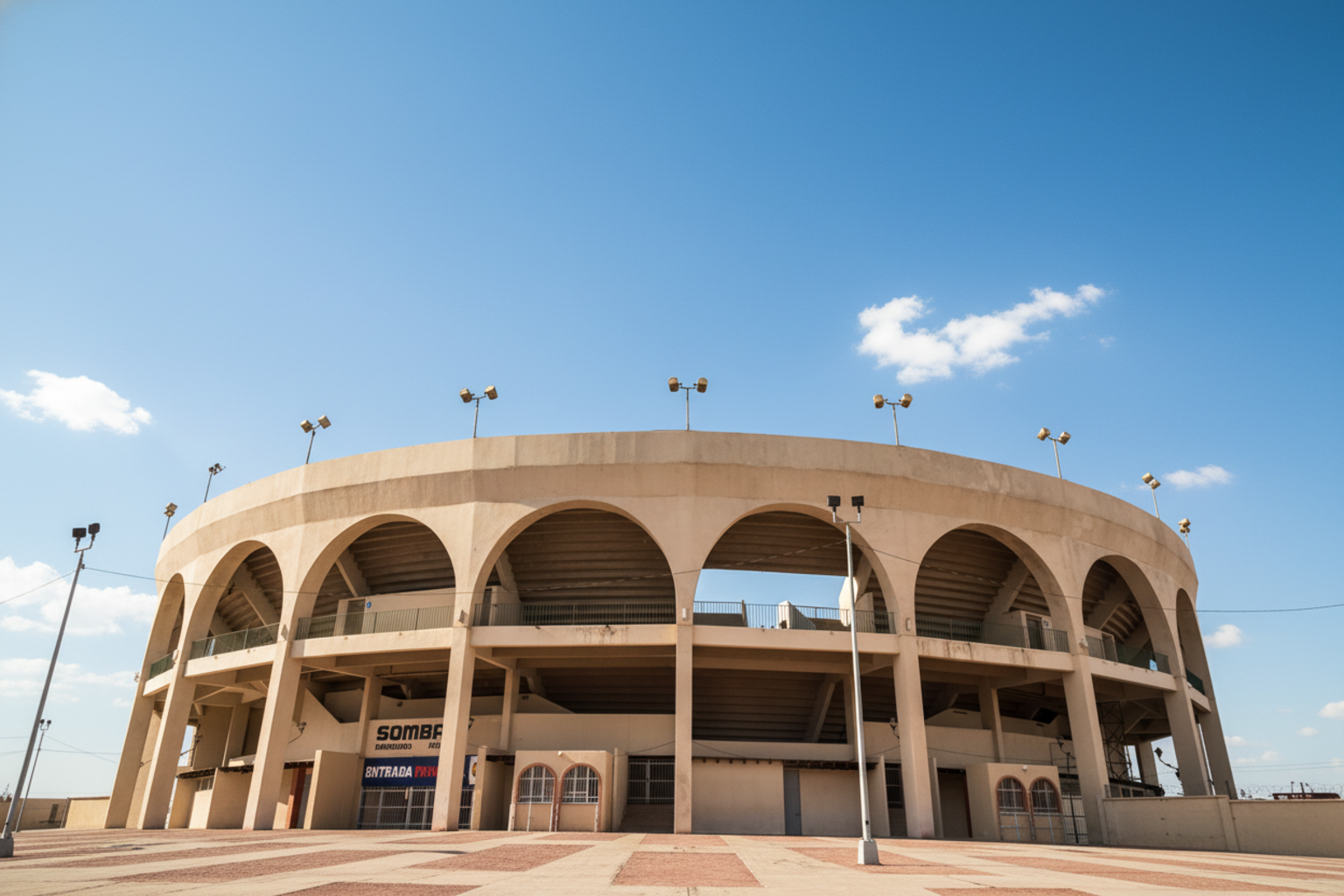
"A witness to the life of Mexicali: half a century of festivity, music and spectacle in the heart of the Centro Cívico."— About Plaza Calafia
An icon of Mexicali
The Plaza de Toros Calafia is one of the most recognizable buildings in Mexicali. Built right in the Centro Cívico, its circular concrete silhouette —with the unmistakable row of large arches on the upper level— has become a landmark for several generations of cachanillas (Mexicali locals). People affectionately call it "the colossus of Centro Cívico".
Opened in 1975, it was born as a bullring —the fifth in the city's history— and for decades it was the home of bullfighting on the border. Over time it left the bullfights behind and transformed into an entertainment venue: its ring has hosted major concerts, boxing matches, cultural and political events. Today it still stands as a living symbol of Mexicali's identity.
History of the colossus
Construction begins
In late 1974 work starts on the arena under the direction of engineer Manuel Martínez, right in the heart of Mexicali’s Centro Cívico.
Grand opening
On November 16, 1975 the Plaza de Toros Calafia opens with a star-studded bill: Manolo Martínez, Eloy Cavazos and Mariano Ramos. It was the fifth bullring in Mexicali’s history.
End of the bullfights
Bullfights stop being held at Calafia and are later banned by decree of the State Congress of Baja California. The arena reinvents itself as an entertainment venue.
50th anniversary
The arena celebrates half a century as the "Cachanilla colossus", coming back to life with events such as the "Bazar en las Alturas" and remaining a symbol of the Centro Cívico.
Did you know? Its construction, started in late 1974, was led by engineer Manuel Martínez. Its capacity has traditionally been cited at around 11,000 spectators, although a later study estimated a real capacity closer to 8,700 seats.
From bullring to entertainment stage
Major concerts
It has hosted internationally renowned artists such as Vicente Fernández, Alejandro Fernández, Julio Iglesias and Shakira.
Boxing & sports
Boxing matches, wrestling and sporting events that take advantage of its arena shape with wrap-around visibility.
Culture & shows
Over the years it has been the stage for artistic, cultural, political and popular events of the city.
Community events
In recent times it has hosted activities such as the "Bazar en las Alturas", reviving the building for new audiences.
The arena's schedule varies by season and event promoter. We recommend checking dates and tickets through the official channels of the specific event before attending.
Architecture
Arena shape
Circular bullring layout, with the ring at the center and wrap-around stands in sun and shade sections.
Upper arches
Its façade is distinguished by a crown of large concrete arches on the upper level — today its visual signature.
Sun, shade & barriers
It keeps the classic bullfighting terminology at its entrances: main entrance, barriers (barreras), shade (sombra) and sun (sol).
Location
How to get there
The Plaza de Toros Calafia is located in Mexicali's Centro Cívico, a central and busy district surrounded by shopping plazas, a casino, government offices and main avenues. It is easily reachable by car or public transit from anywhere in the city.
View on Google MapsMap
Frequently asked questions
What is the Plaza de Toros Calafia?
It is Mexicali’s bullring, a circular arena-type building in the Centro Cívico. Opened in 1975, today it works as a venue for concerts, boxing, cultural events and shows. Bullfights are no longer held there.
When did it open?
On November 16, 1975, with a bullfight featuring Manolo Martínez, Eloy Cavazos and Mariano Ramos. It was the fifth bullring in Mexicali’s history.
What is its capacity?
Its historic capacity is usually cited at around 11,000 spectators, although later studies estimate a real capacity closer to 8,700 seats.
Are there still bullfights?
No. Bullfights have not been held at Calafia for several years and bullfighting was banned by the State Congress of Baja California. The building is now used for concerts and events.
Where is it located?
In Mexicali’s Centro Cívico, a central district surrounded by shopping plazas, a casino and government offices, easily accessible from the rest of the city.
Discover more of Mexicali
The Plaza de Toros Calafia is just one of the many iconic places in the capital of Baja California.